
Bridal Sizing Explained: How Wedding Dress Sizes Really Work
Choosing a wedding dress is exciting until someone asks for your size. If you've started searching for a wedding dress sizing chart, you've probably realized that bridal sizing doesn't match the clothes hanging in your closet. That difference catches many brides off guard, especially if it's their first time shopping for a wedding gown.
Understanding how bridal sizing works before you order your dress can help you avoid unnecessary stress and make decisions with confidence. Knowing what to expect also makes your fitting appointments feel much more straightforward.
Why Wedding Dress Sizes Are Different From Everyday Clothing
One of the biggest surprises during dress shopping is discovering that your bridal size may be larger than your everyday clothing size. While this can feel confusing at first, it's completely normal.
Wedding gown designers typically use their own size standards rather than modern ready-to-wear fashion sizing. Over the years, everyday clothing brands have adjusted their sizing to reflect changing consumer expectations, but many bridal designers have continued using traditional measurement systems.
Because of that, a bride who wears a size 8 in everyday clothing might wear a bridal size 10 or 12 with certain designers. Another designer may recommend something different for the very same bride.
This is exactly why your stylist focuses on measurements instead of the number printed on the tag.
Why Every Designer Has Different Measurements
There is no universal sizing standard across bridal designers.
Each designer develops patterns using their own fit models, measurement charts, and grading methods. That means two dresses labeled with the same size can fit very differently.
Several factors affect sizing, including:
The designer's measurement chart
The dress silhouette
The fabric's structure and stretch
Construction details such as corsets, boning, or built-in support
A fitted crepe sheath gown will often feel completely different from a structured satin ball gown, even if both carry the same size label.
Instead of comparing size numbers, compare your measurements to the designer's recommendations.
How a Wedding Dress Sizing Chart Is Used
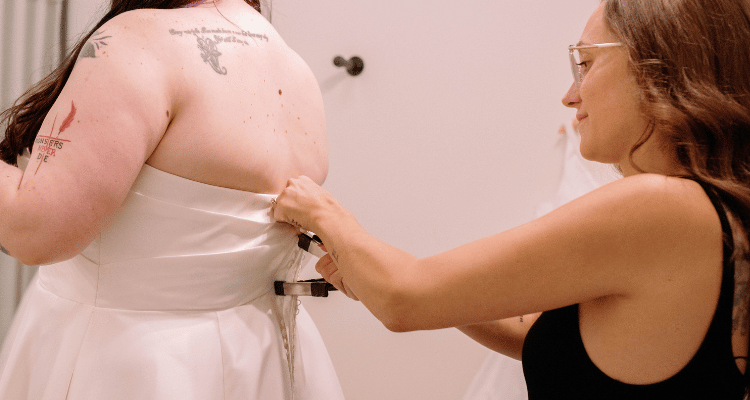
A professional stylist begins by taking accurate measurements of your bust, natural waist, and hips. Those numbers are then compared with the designer's sizing guide to determine the most appropriate size.
In many cases, your measurements may fall into more than one size category.
For example, your bust may match one size while your hips match another. When that happens, your stylist usually recommends ordering the size that best accommodates your largest measurement. Alterations can then tailor the remaining areas for a more precise fit.
This approach provides enough fabric for adjustments without creating unnecessary limitations later.
Why You Should Never Order Based Only on Your Clothing Size

It can be tempting to order the same size you wear every day, especially if shopping online. Unfortunately, that often leads to disappointment.
Everyday clothing brands use different sizing systems, and many garments contain stretch fabrics that create a more forgiving fit. Bridal designers construct gowns differently.
Wedding dresses often include:
Structured bodices
Boning for support
Limited fabric stretch
Precision tailoring
These design elements create the elegant shape brides love, but they also require much greater accuracy during sizing.
Trusting your actual measurements instead of your everyday size gives you the best starting point for a beautiful fit.
Should You Order a Smaller Size If You're Losing Weight?
Many brides hope to lose weight before the wedding, but ordering a smaller dress usually creates unnecessary risk.
Weight loss doesn't happen in predictable places. You may lose inches from your waist, your hips, your bust, or somewhere else entirely. Because no one can predict exactly how your body will change, sizing down in advance may leave too little fabric for alterations if your plans don't unfold exactly as expected.
Most bridal professionals recommend ordering the size that fits your current measurements.
If your body changes before alterations begin, an experienced seamstress can usually make thoughtful adjustments for a more customized fit.
What Happens If You're Between Sizes?
Being between sizes is extremely common.
Rather than forcing your measurements into a single size, your stylist evaluates the dress design and how each area needs to fit.
For example:
A fitted mermaid gown may require extra room through the hips.
A ball gown may allow more flexibility below the waist because of its full skirt.
A corset back may provide additional adjustability compared to a zipper closure.
Your stylist also considers the fabric and construction before recommending a size.
The goal is never to choose the smallest possible size. The goal is to choose the size that creates the best foundation for alterations.
Will Alterations Change the Fit?
Absolutely.
Alterations are a standard part of almost every bridal experience. They transform a professionally sized gown into one that feels made specifically for you.
Common alterations include:
Taking in the bodice
Adjusting the straps
Shortening the hem
Refining the waistline
Bustle creation for the reception
These adjustments create balance throughout the gown while improving comfort and movement.
Because most wedding dresses require alterations, your initial order size provides the best starting point for the perfect fit.
Questions to Ask During Your Bridal Appointment
If you're unsure about sizing, don't hesitate to ask questions during your appointment.
Some helpful questions include:
Which measurement determined my recommended size?
Does this designer typically run small, large, or true to their chart?
Will this fabric stretch during wear?
How much room is available for alterations?
How much time should I allow for fittings?
A knowledgeable stylist will gladly explain the reasoning behind each recommendation, helping you feel confident before placing your order.
Focus on the Fit, Not the Number
It's easy to become attached to a familiar clothing size, but your wedding dress label isn't a reflection of your body.
Every designer follows different sizing standards and constructs gowns differently. The number inside your dress simply reflects the designer's sizing system rather than how your gown will fit.
What truly matters is how your dress looks, how it feels, and how confidently you walk down the aisle wearing it.
When you shift your attention from the label to the overall fit, the entire shopping experience becomes much more enjoyable.
Find Your Perfect Fit at Heart to Heart Bride
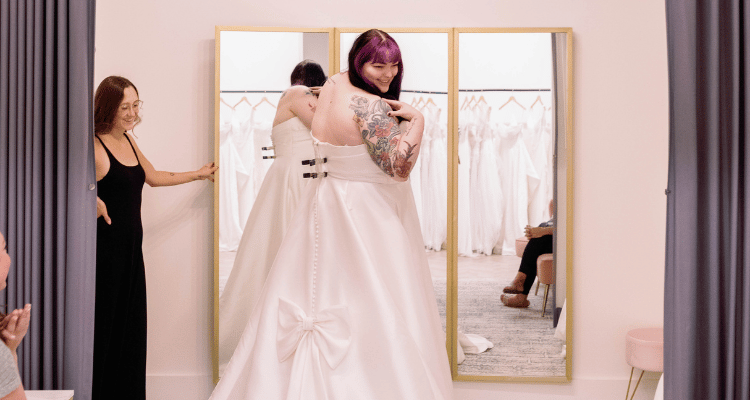
Choosing the right wedding dress size doesn't have to feel confusing. At Heart to Heart Bride, our experienced stylists take accurate measurements, explain designer sizing, and help you choose the size that gives you the best foundation for alterations.
Book your appointment today and let our team help you start your bridal journey with confidence.