
Wedding Shoes for the Bride: How to Choose the Right Pair
Once you have your gown, it is time to think about what you will wear underneath it. The right wedding shoes for bride can influence your dress length, overall silhouette, and comfort throughout the day. From choosing the right heel height to finding a style that complements your gown, a few thoughtful details can help you find a pair that looks beautiful and feels just as good from the ceremony through the reception.
Start With Your Wedding Dress

Your shoes should complement your gown rather than compete with it. Look at your dress silhouette, hemline, fabric, and overall style when choosing your footwear.
A sleek satin gown pairs well with classic pumps or delicate strappy heels. A lace gown can look beautiful with embellished sandals, vintage-inspired shoes, or pointed-toe heels. If your dress has heavy beading or detailed embroidery, a simpler pair of shoes can keep the look balanced and let the gown stand out.
Your dress length also affects how much attention your shoes will receive. A floor-length gown will cover most of your footwear, but your heel height still affects where the hem falls. With a tea-length or high-low gown, more of the shoe remains visible, so its design becomes a bigger part of your bridal look.
If you are wearing a floor-length gown, bring your wedding shoes to your final alterations appointment. Your seamstress can measure the hem with your actual heel height, helping the gown fall at the right length without dragging or sitting too far above your shoes.
How High Should Your Wedding Heels Be?
The ideal heel height depends on your comfort, your gown's proportions, and how much time you expect to spend on your feet.
Choose a Heel Height You Can Actually Wear
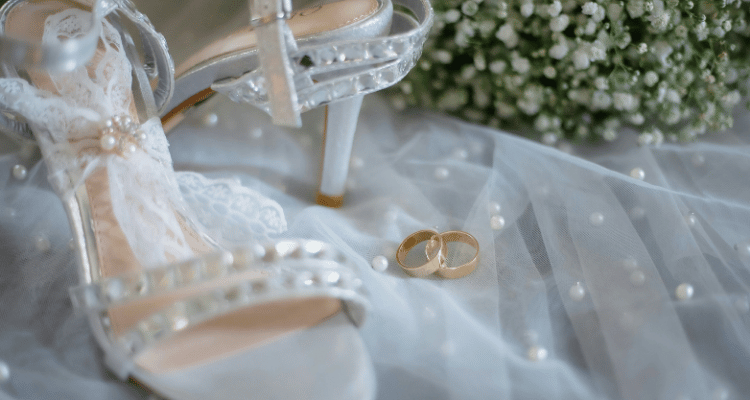
A two- to three-inch heel gives you some added height without putting as much pressure on your feet as a higher stiletto. It is a practical choice if you want the look of a heel while still feeling steady throughout the day.
A four-inch heel or higher creates a more dramatic look, but it can require more balance and become uncomfortable after several hours. If you do not usually wear high heels, choose a height that already feels familiar rather than testing a much higher heel for the first time on your wedding day.
A kitten heel gives you a small amount of height with a delicate, feminine finish. A block heel offers a wider base, making it a steadier option for walking and standing for long periods.
Flats can also work beautifully with a bridal gown. Pointed-toe flats, embellished ballet flats, and elegant slippers can give you a polished finish without the added height of a heel.
Think About Your Partner's Height
Your heel height can also affect the overall proportions of your wedding-day look. If you want to maintain a certain height difference between you and your partner, keep this in mind when trying on different shoes.
Still, height does not have to be the deciding factor. Choose a heel that allows you to stand comfortably, walk naturally, and feel confident throughout the day. A shoe that feels secure and comfortable will help you carry yourself with ease from the ceremony to the reception.
Comfort Should Influence Style, Not Replace It

Your bridal shoes should feel comfortable enough to wear for several hours. You may spend a lot of the day standing during the ceremony, walking between photo locations, and dancing at the reception, so comfort should play a key role in your choice.
Look for features that give your feet proper support. A cushioned footbed can help reduce pressure on the ball of your foot, while an ankle strap can keep the shoe securely in place as you walk. A roomier toe box can also prevent your toes from feeling cramped after hours of wear.
The sole deserves attention too. A completely smooth sole may feel slippery on polished floors, while a textured outsole can provide better grip as you move around the venue.
Your choice of material can also affect how the shoes feel. Softer leather and quality textile uppers can become more comfortable with wear, while rigid materials may feel less forgiving. If you choose embellished shoes, check where the details sit against your feet. Beading, metallic accents, and other decorations should not rub against your toes or ankles when you walk.
When Should You Buy Your Bridal Shoes?

You should have your wedding shoes chosen before your final dress fitting. Your alterations specialist can use the exact heel height to determine where your gown should fall.
You do not need to buy your shoes immediately after ordering your dress. You can start shopping once you know your gown’s silhouette and the heel height you plan to wear.
If you plan to change into a second pair during the reception, bring both pairs to your alterations appointments. Different heel heights can change the length of your gown, especially with a floor-length hem.
For example, changing from a four-inch heel to a flat can leave the front of your gown much closer to the floor. Your seamstress can account for this difference when adjusting the hem, helping both pairs work with the finished gown.
How to Break In Your Wedding Shoes
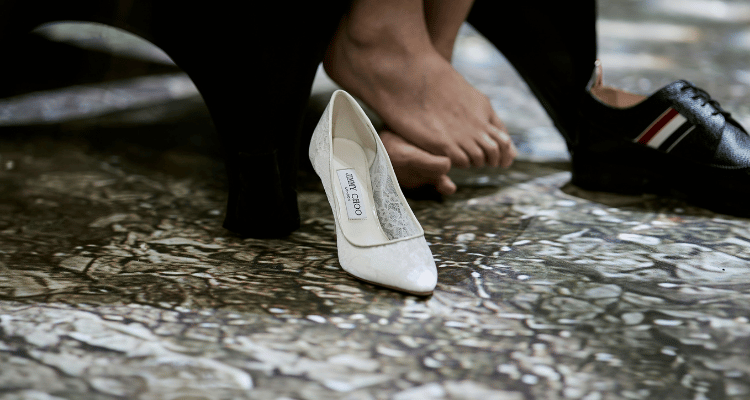
Do not wait until your wedding day to wear your shoes for the first time. A pair that feels comfortable during a quick try-on can feel very different after several hours on your feet.
Wear your shoes around the house for short periods before the wedding. Walk on different surfaces and practice turning, stopping, and going up and down stairs. This helps you adjust to the shoes and identify any areas that feel tight or uncomfortable.
If a shoe rubs against your heel, toes, or ankle, you can address the problem before the big day. You may need a small adjustment, extra cushioning, or a different pair altogether.
Practice walking in your shoes while wearing your gown as well. This lets you get familiar with the dress length and practice taking steps without catching the hem under your shoes.
It is also a good idea to have a comfortable second pair ready for the reception. A lower heel or elegant flat in a similar shade can give your feet a break while keeping your bridal look polished.
Match Your Shoes to Your Bridal Style

Your shoes can also enhance the bridal style you have created with your gown and accessories. Choose details that complement the design of your dress and create a cohesive finish.
For a classic bridal look, pointed-toe pumps, satin heels, and delicate slingbacks pair well with timeless gowns and refined accessories. Their clean silhouettes add polish without drawing attention away from the dress.
For a romantic look, consider shoes with soft fabrics, floral details, pearls, bows, or delicate embellishments. These details can complement similar elements in your gown and accessories.
For a modern bridal look, choose footwear with clean lines and structured shapes. Minimalist sandals, square-toe heels, and sleek pointed shoes can complement contemporary gowns while keeping the overall look refined.
For a vintage-inspired ensemble, details such as T-straps, low heels, covered toes, and subtle embellishments can strengthen the theme. These features can tie your footwear to the era-inspired details throughout your bridal look.
Consider Your Wedding Venue

Your wedding venue should influence your footwear choice just as much as your dress. The setting can affect how comfortable and practical your shoes feel throughout the celebration.
A formal ballroom gives you the freedom to wear delicate heels without worrying about uneven ground. An outdoor garden ceremony requires more consideration because thin heels can sink into grass and make walking less stable.
For a beach ceremony, flat sandals or low-profile shoes can make walking on sand easier. A block heel can also work well for outdoor venues because its wider base provides better stability.
If your wedding takes place across multiple locations, choose shoes that can handle each setting comfortably. A ceremony at a historic venue followed by an outdoor reception may require footwear that feels polished indoors and remains practical on uneven ground.
Should Your Wedding Shoes Match Your Dress?

Your shoes do not need to match your gown exactly. A complementary shade or contrasting detail can add interest while keeping your bridal look cohesive.
Ivory, champagne, nude, metallic, and soft blush tones can work beautifully with many gown colors. You can also add personality through the shoe’s texture, embellishments, or a subtle pop of color.
If you choose a statement shoe, consider how it works with your accessories. Heavily embellished shoes can pair well with simpler jewelry, while minimalist shoes can balance more detailed accessories.
Aim for a balanced look where every detail works together. Your shoes should feel like a natural part of your bridal ensemble rather than an afterthought.
Explore Wedding Dresses at Heart to Heart Bride
At Heart to Heart Bride, you can explore bridal gowns with expert guidance on creating a complete wedding-day look. When you find your gown, bring your chosen shoes to your fittings so your seamstress can achieve the right hem length and finish.
The right shoes should make you feel confident with every step. Choose a pair that feels beautiful, supports your style, and lets you enjoy your wedding day from the first walk down the aisle to the final dance. Book an appointment and start finding the gown that brings your bridal vision together.