
How to Match Bridesmaid Dresses with Your Wedding Dress
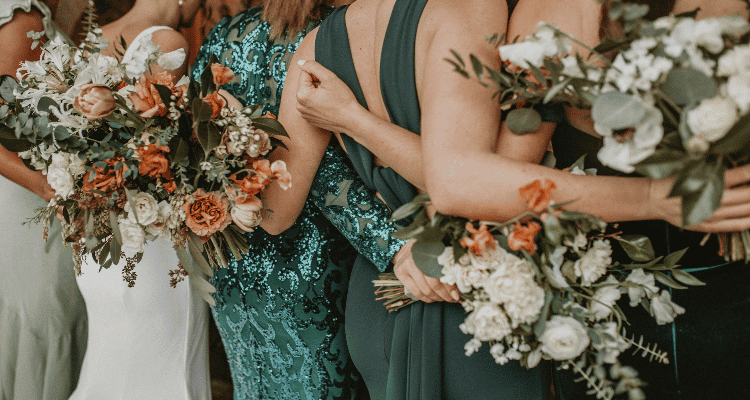
Choosing bridesmaid dresses is easier when you know how you want your wedding party to look beside your bridal gown. You want the dresses to complement your style, suit the celebration, and help your bridesmaids feel confident. Learning how to match bridesmaid dresses with wedding dress styles gives you a starting point for coordinating colors, fabrics, silhouettes, and finishing details without making every outfit look identical.
The goal is not to recreate your bridal look across the entire wedding party. Instead, choose details that connect the dresses while allowing your gown to remain the focal point.
1. Let Your Wedding Dress Guide the Overall Style
Start with the gown you plan to wear, or at least the style you are considering. Look at its overall character. Is it romantic and embellished, clean and minimalist, structured and formal, or light and bohemian? Those qualities can guide the mood of your bridesmaid dresses.
A lace A-line gown with a soft, flowing skirt could pair beautifully with chiffon bridesmaid dresses. If your dress has clean lines and a sculpted silhouette, sleek crepe or satin gowns may create a more cohesive look. For a dramatic ball gown, simpler bridesmaid dresses can provide balance rather than adding several competing details.
2. Choose Colors That Work With Your Gown and Wedding Palette
Your wedding dress usually gives you a neutral starting point, but its shade still matters. Bright white, soft white, ivory, and champagne can look different beside certain colors, especially in photographs. Before settling on a bridesmaid palette, compare fabric swatches with your gown in natural light.
Then consider the colors already present in your flowers, stationery, venue, and décor. Your bridesmaid dresses can reinforce those choices without matching every detail exactly.
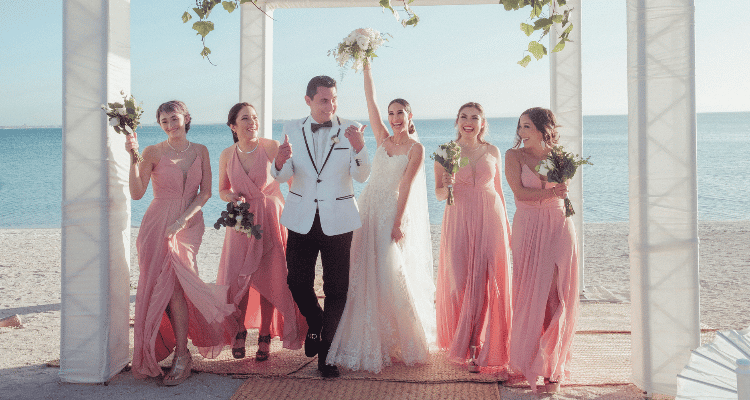
For a garden celebration, sage green, dusty rose, or soft lavender can complement an ivory gown and natural floral arrangements. Dusty blue works beautifully with a classic white dress and a calm, elegant palette. Champagne and warm neutrals suit a refined celebration, while burgundy can add depth to an autumn or winter wedding.
Pay attention to undertones. Warm ivory often works with muted earth tones, blush, and champagne. Cooler white gowns may sit more naturally beside blue-gray or lavender. Compare actual fabric swatches rather than relying on online color charts, since screens can distort shades.
3. Coordinate Fabrics and Textures
Fabric affects the way a dress moves, catches the light, and photographs. Coordinating textures can help your bridal party look connected even when the dresses have different shapes.
A gown with intricate lace or floral appliqués can pair well with relatively simple chiffon bridesmaid dresses. The softer fabric complements the romance of the gown without repeating its embellishments. Satin bridesmaid dresses can work alongside a satin bridal gown for a polished look, while crepe can add a clean contrast. If your dress features layers of tulle, lightweight chiffon can maintain an airy feel throughout the wedding party.
4. Balance Silhouettes, Necklines, and Details
Your bridesmaids do not need to wear the same silhouette as you. In fact, choosing shapes that complement rather than imitate your gown often creates a more balanced group look.
If you are wearing an A-line dress, your bridesmaids might choose flowing A-line, column, or gently fitted gowns. A fitted mermaid gown can look striking beside simpler column or softly flared bridesmaid dresses. The contrast helps your bridal silhouette stand out.
Necklines and sleeves offer another way to create a subtle connection. A sweetheart neckline on your gown might pair well with sweetheart, square, or V-neck bridesmaid dresses. If your dress has lace sleeves, your bridesmaids do not need matching lace. Simple straps or understated cap sleeves can keep the overall look balanced.
Be mindful of embellishments. If your gown has extensive beading, sequins, or detailed lace, simpler bridesmaid dresses will usually let those features shine. If your gown is minimalist, you have more room to introduce texture or interesting details in the bridal party's attire.
5. Consider Your Bridesmaids' Comfort and Individual Style
Set a few clear guidelines, such as color, dress length, and formality, then allow flexibility in neckline or silhouette. This is especially helpful when your bridesmaids have different preferences or body shapes.
Think about the practical demands of the day. Your bridesmaids will stand during the ceremony, walk between locations, pose for photographs, and dance at the reception. A dress that looks beautiful but restricts movement may become frustrating after several hours. Check that the length works with their shoes and that the fabric suits the season and venue.
6. Match the Dresses to Your Venue and Wedding Aesthetic
The venue helps determine how formal the entire wedding party should look. Flowing chiffon in soft colors can suit a garden or outdoor ceremony. Satin gowns in deeper or richer shades may feel more at home in a formal ballroom. For a beach wedding, breathable fabrics and relaxed silhouettes are often more practical than heavily structured dresses.
If possible, view fabric swatches in lighting similar to your ceremony space. Colors can look different indoors, outdoors, and in photographs, so checking them early can prevent surprises on the wedding day.
7. Bring the Look Together With Accessories and Flowers
If your dress has pearl details, simple pearl earrings or bracelets can echo that feature without copying it. If your gown has crystal embellishments, understated silver jewelry may create a subtle link. Your bridesmaids can also carry bouquets that include colors from their dresses or your wider wedding palette.
You do not need identical shoes, jewelry, or hairstyles for everyone. Agree on a general direction, such as metallic shoes or delicate jewelry, and leave room for personal choices. The flowers can do some of the coordinating work, bringing the colors of the dresses, your gown, and the ceremony setting into one arrangement.
8. Avoid Trying to Match Every Detail
Choose two or three details to keep consistent, such as color, dress length, or fabric. Let other elements vary within those boundaries. For example, your bridesmaids could wear the same shade of sage in different necklines, or complementary shades of mauve and dusty rose in similar fabrics.
Before making a final decision, look at the options together. Compare swatches with your gown, consider the venue, and check how the dresses look as a group. It is easier to adjust the palette or styling before anyone orders a dress than after alterations and fittings have begun.
Create a Bridal Look That Feels Like Yours
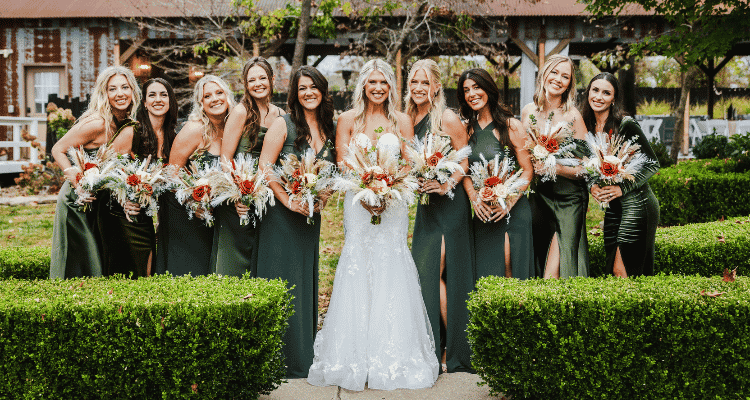
The best bridesmaid dresses are not necessarily the ones that match your wedding gown most closely. They are the ones that complement its style, suit your celebration, and help your bridal party feel comfortable and confident. Start with your gown, then build a thoughtful combination of colors, fabrics, silhouettes, and details.
At Heart to Heart Bride, you can explore the bridal collection and find a wedding dress that reflects the look and atmosphere you envision for your day. When you are ready to choose the gown that will inspire the rest of your wedding styling, book your bridal appointment and let your bridal vision take shape.